

More winters from the car you rely on
Slow the corrosion that ends a car's life early, and keep subframes and sills sound for MOT after MOT.
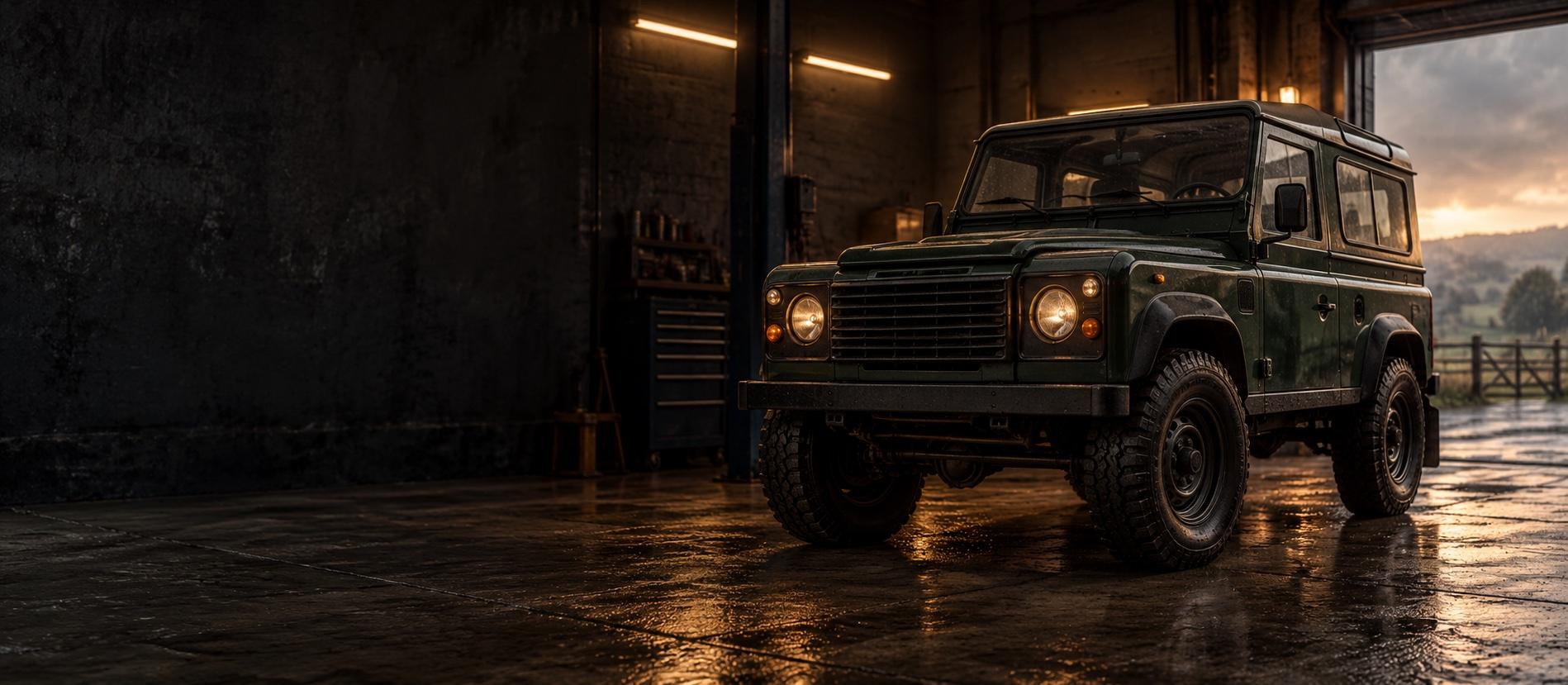
Now taking enquiries for our first appointments
Lanoguard underbody protection · Near Richhill, Co. Armagh
Every wet mile and every gritted road leaves something underneath your vehicle. We clean it, dry it properly and seal the underside with Lanoguard, so the metal you never look at is protected through the winters ahead.
Why it matters here
You'll rarely see it happening. Corrosion starts in seams, box sections and brackets, out of sight, long before it bubbles through a sill or turns up on an MOT sheet. The conditions here give it plenty of help.
Road spray coats the underside on almost every journey, and in a damp climate it rarely gets the chance to dry out before the next one.
From autumn into spring, salt is spread on main routes. Salty water speeds up rusting and works into folds and joints, where it sits for weeks.
A car parked outside after a wet drive stays damp underneath far longer than the paintwork you can see and wipe.
Mud and grit from rural roads and farm lanes pack into arches and chassis rails, keeping the metal behind them wet.
Rust can begin as a few orange spots, spread across exposed steel, then develop into flaky scale and metal loss. Protecting sound metal early is the aim. These are reference photographs of different vehicles, not a time-lapse or examples of our work.
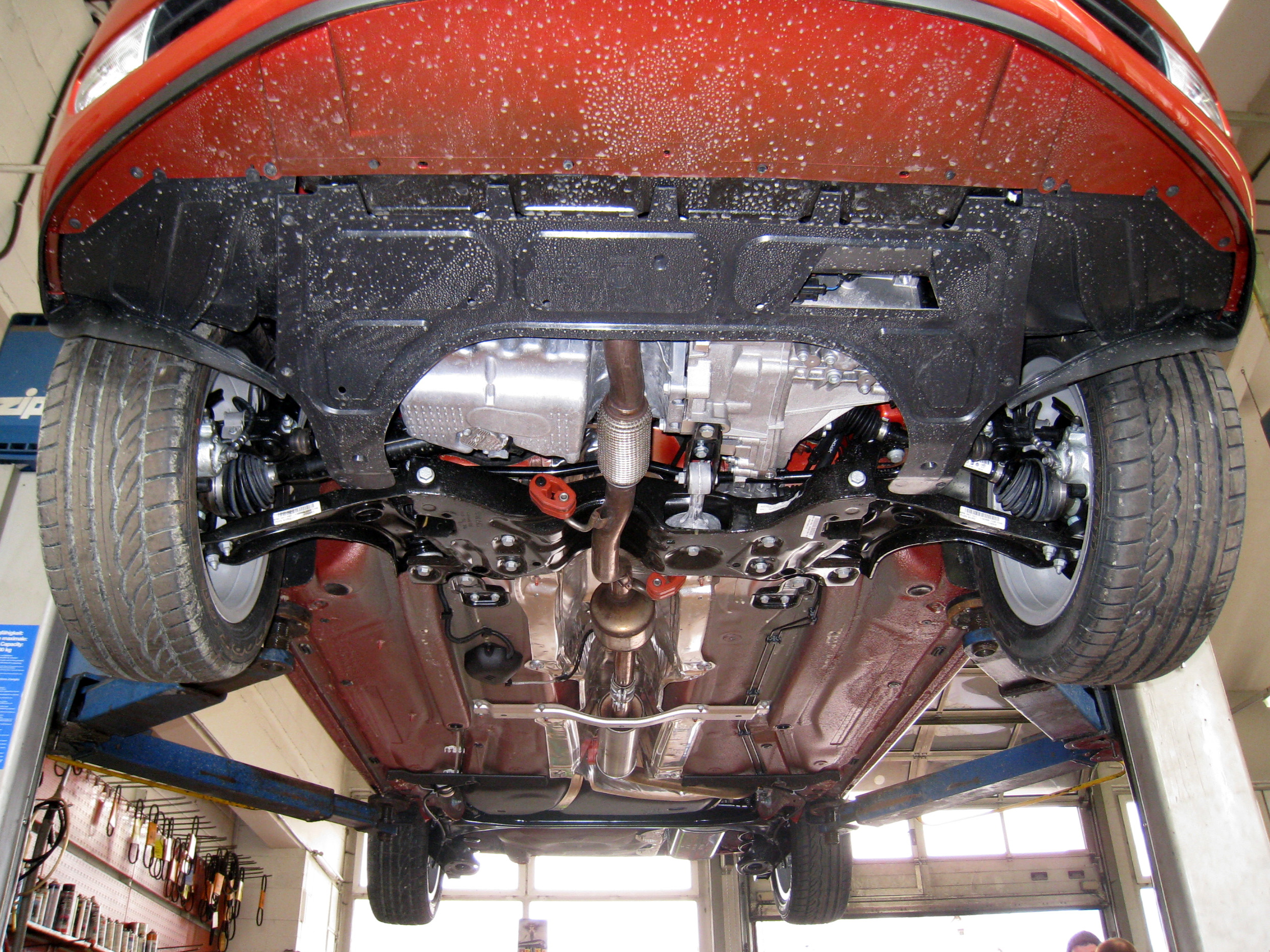
A largely intact underside is the starting point to aim for. Protection helps keep moisture and road salt away from exposed steel, with regular checks and maintenance.
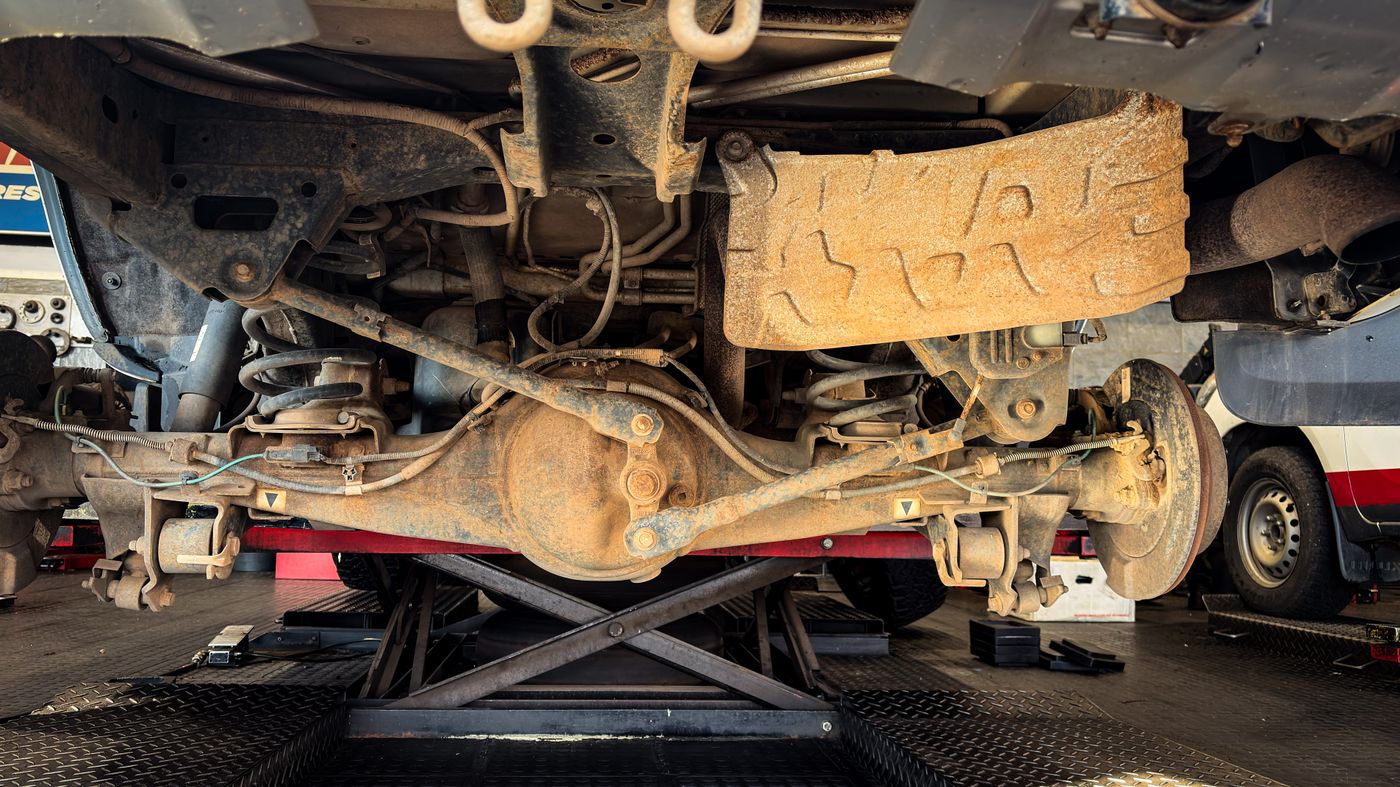
Orange or brown corrosion does not automatically mean the metal is beyond protection. Lanoguard can be applied over sound, stable surface rust after loose material is removed. Suitability needs an inspection, not just a photograph.
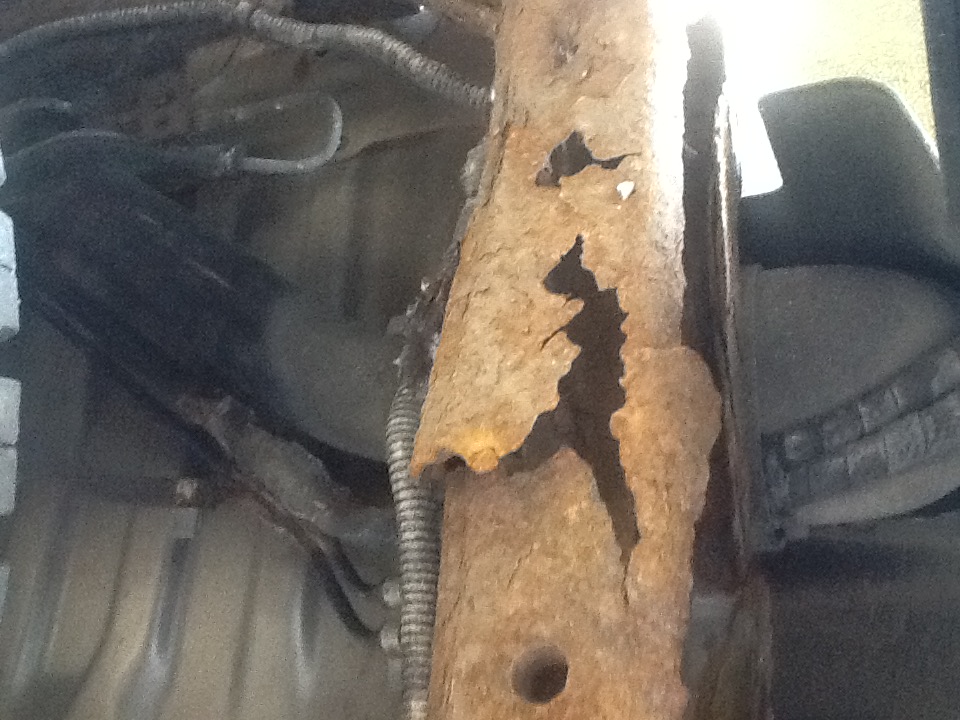
Deep corrosion and holes need structural assessment and appropriate repair or replacement before protection. Lanoguard cannot replace missing metal or restore its strength.
These are possible stages of unchecked corrosion, not a fixed timeline or a prediction for your vehicle. Exposure, vehicle design, existing coatings and maintenance all matter. Manufacturer’s preparation guidance.
The treatment
Lanoguard is a lanolin-based corrosion protection product. Lanolin is the natural wax found in sheep's wool, which is what keeps a sheep dry on a wet hillside.
Applied to a clean, dry underside, it forms a water-repellent film that keeps moisture and air away from the metal. Unlike traditional hard underseal it doesn't set into a brittle shell. It stays supple, creeps into seams and spot-welds, and keeps working where a hard coating would crack and let water in behind it.
We're an independent business that applies Lanoguard products. We are not the manufacturer, and we are not an official or accredited Lanoguard centre.
| Property | Hard underseal | Lanolin-based coating |
|---|---|---|
| Finish | Sets hard, rubbery or bitumen-like | Stays soft and flexible |
| When chipped | Water can creep behind it and sit unseen | Soft film tends to close over small marks |
| Seams & folds | Bridges over the top | Creeps into joins and edges |
| Sound surface rust | Usually needs taking back to clean metal | Can go over prepared surface rust to seal out air and moisture |
| Later on | Hard to inspect, hard to repair | Easy to check and top up |
How it's done
The coating is only as good as the surface it goes on. Most of the work happens before any Lanoguard comes out of the tin.
We look over the underside with you, note its condition, and photograph it. You get a confirmed price before any work starts, including any extra preparation it needs.
You'll know: the price, and what we found
The underside, arches and chassis rails are cleaned of mud, grit and road film. Loose rust and flaking scale are scraped and wire-brushed back. Brakes, exhaust, sensors and anything that shouldn't be coated are masked.
Most of the time goes here
After a wet Armagh morning, a car can hold water in seams and box sections for hours. We dry it fully before anything is applied, because sealing moisture in would defeat the point.
If this needs extra time, we tell you first
Lanoguard is applied to the floor pan, sills, subframes, suspension mounts, wheel arches and exposed seams, working it into joins and edges rather than just spraying the surface.
Even coverage, edges and seams included
The coating is left to settle for at least 24 hours before the vehicle is driven, as Lanoguard advises. Masking comes off, the underside is checked for missed areas, and you get photographs of the finished job with simple aftercare advice.
You'll see: before and after photographs
Who it's for
Slow the corrosion that ends a car's life early, and keep subframes and sills sound for MOT after MOT.
Seal original panels and fresh repairs alike, with a coating you can inspect and top up rather than one that hides problems.
Ladder chassis, rear crossmembers and outriggers take the worst of farm lanes and wading. They benefit most from a soft, creeping film.
Less time off the road for corrosion repairs, and a van that's in better shape when it's time to sell or trade it in.
Pricing
Underbody treatment
from £195
Typical small to medium car in reasonable condition. Final price confirmed after assessment.
| Small & medium carsHatchbacks, saloons, small estates | from £195 |
|---|---|
| Large cars & SUVsLarge estates, MPVs, crossovers | Quoted on vehicle |
| 4x4s & pickupsLadder-chassis and off-road vehicles | Quoted on vehicle |
| VansSmall to large panel vans | Quoted on vehicle |
Some vehicles need more preparation before they can be treated properly. If yours does, we'll explain why and price it before we start.
No surprises on the day. You agree the price before work begins. If we find something during preparation that changes the job, we stop and talk to you first.
Before & after
We're a new business, so this space is waiting for our first finished jobs. Everything shown here will be a vehicle we've treated ourselves, photographed before and after with the owner's permission. No stock images.
Get a price
It takes about a minute. There's no obligation, and we won't add you to any mailing list.
Questions
If yours isn't here, ask. We'd rather explain than oversell.
It depends on how the vehicle is used, washed and stored. Because a lanolin coating stays soft it doesn't crack and flake like hard underseal, but spray, gravel and pressure washing gradually wear it in exposed places such as wheel arches. We'd rather tell you what to expect for your vehicle at assessment than quote a number of years. Lanoguard recommends reapplying at least once a year, so a yearly check, ideally before winter, with a top-up of any thin areas keeps it doing its job.
Over sound surface rust, yes, once loose scale has been removed. Lanoguard seals it from the air and moisture that keep it spreading. It can't repair metal that's already weakened or holed. If we find structural rust, we'll show you and recommend getting it repaired before treatment.
Not much. Bring it as it is. Please don't jet-wash underneath just before your appointment, as the vehicle needs to be dry. Tell us about any known leaks, recent welding or aftermarket parts underneath. All cleaning and masking is part of the job.
Wash the bodywork as normal. The coating takes about 7–10 days to fully cure, so leave the underside alone until then. After that, avoid pressure washing the underside and arches, as a jet can strip a soft coating. After salty spells, a low-pressure rinse underneath is the kindest option.
Any coating applied over trapped water seals the problem in. In our climate a vehicle can hold moisture in seams and box sections for hours after a drive, so we dry it properly first. If your vehicle needs more drying time than usual, we'll tell you before work starts.
We're taking names ahead of opening. Send your details with the form or give us a call, and we'll contact you as soon as appointment dates are confirmed. There's no deposit and no commitment.
No. We don't do mobile or call-out work. Every vehicle is treated at our garage near Richhill, under cover, where it can be cleaned, dried and coated properly whatever the weather is doing. It's a short drive from Portadown, Craigavon and Armagh.
Usually most of a working day. Drop-off in the morning and collection later the same day is typical. Vehicles that need extended drying may need to stay longer, and we'll tell you before you book.
It suits most cars, SUVs, 4x4s, pickups, vans and classics. Newer vehicles are ideal because the metal is still clean. On hybrids and electric vehicles we keep clear of high-voltage components and battery packs, and we'll explain what can be treated. If you're unsure, send us the make, model and year.
There's a mild wool-wax smell for a few days. In warm weather a little excess can drip for the first day or two, so parking on cardboard for a night or two is sensible.
Some manufacturers set conditions on their corrosion warranties. If your vehicle is still covered, check your handbook or ask your dealer before booking. We're happy to talk it through with you.
No. We're an independent business that applies Lanoguard products. We aren't the manufacturer, and we aren't an official or accredited Lanoguard centre.
Before the gritters come out
From £195, confirmed after we've seen your vehicle. Tell us what you drive and we'll get back to you with a price.
Contact & location
We don't offer call-outs. You bring the vehicle to our garage, and it's treated indoors where it can be cleaned and dried properly. Most customers come from Richhill, Portadown, Craigavon and Armagh, all within a short drive.