

More winters from the car you rely on
Slow the corrosion that ends a car's life early, and keep subframes and sills sound for MOT after MOT.
The treatment
Lanoguard is a lanolin-based corrosion protection product. Lanolin is the natural wax found in sheep's wool, which is what keeps a sheep dry on a wet hillside.
Applied to a clean, dry underside, it forms a water-repellent film that keeps moisture and air away from the metal. Unlike traditional hard underseal it doesn't set into a brittle shell. It cures to a flexible, wax-like film that can be inspected and renewed as part of regular maintenance.
We're an independent business that applies Lanoguard products. We are not the manufacturer, and we are not an official or accredited Lanoguard centre.
Product information: Lanoguard’s preparation and curing guidance.
| Property | Hard underseal | Lanolin-based coating |
|---|---|---|
| Finish | Sets hard, rubbery or bitumen-like | Stays soft and flexible |
| When chipped | Water can creep behind it and sit unseen | Soft film tends to close over small marks |
| Seams & folds | Bridges over the top | Creeps into joins and edges |
| Sound surface rust | Usually needs taking back to clean metal | Can go over prepared surface rust to seal out air and moisture |
| Later on | Hard to inspect, hard to repair | Easy to check and top up |
Why it matters here
You'll rarely see it happening. Corrosion starts in seams, box sections and brackets, out of sight, long before it bubbles through a sill or turns up on an MOT sheet. The conditions here give it plenty of help.
Road spray coats the underside on almost every journey, and in a damp climate it rarely gets the chance to dry out before the next one.
From autumn into spring, salt is spread on main routes. Salty water speeds up rusting and works into folds and joints, where it sits for weeks.
A car parked outside after a wet drive stays damp underneath far longer than the paintwork you can see and wipe.
Mud and grit from rural roads and farm lanes pack into arches and chassis rails, keeping the metal behind them wet.
Rust can begin as a few orange spots, spread across exposed steel, then develop into flaky scale and metal loss. Protecting sound metal early is the aim. These are reference photographs of different vehicles, not a time-lapse or examples of our work.
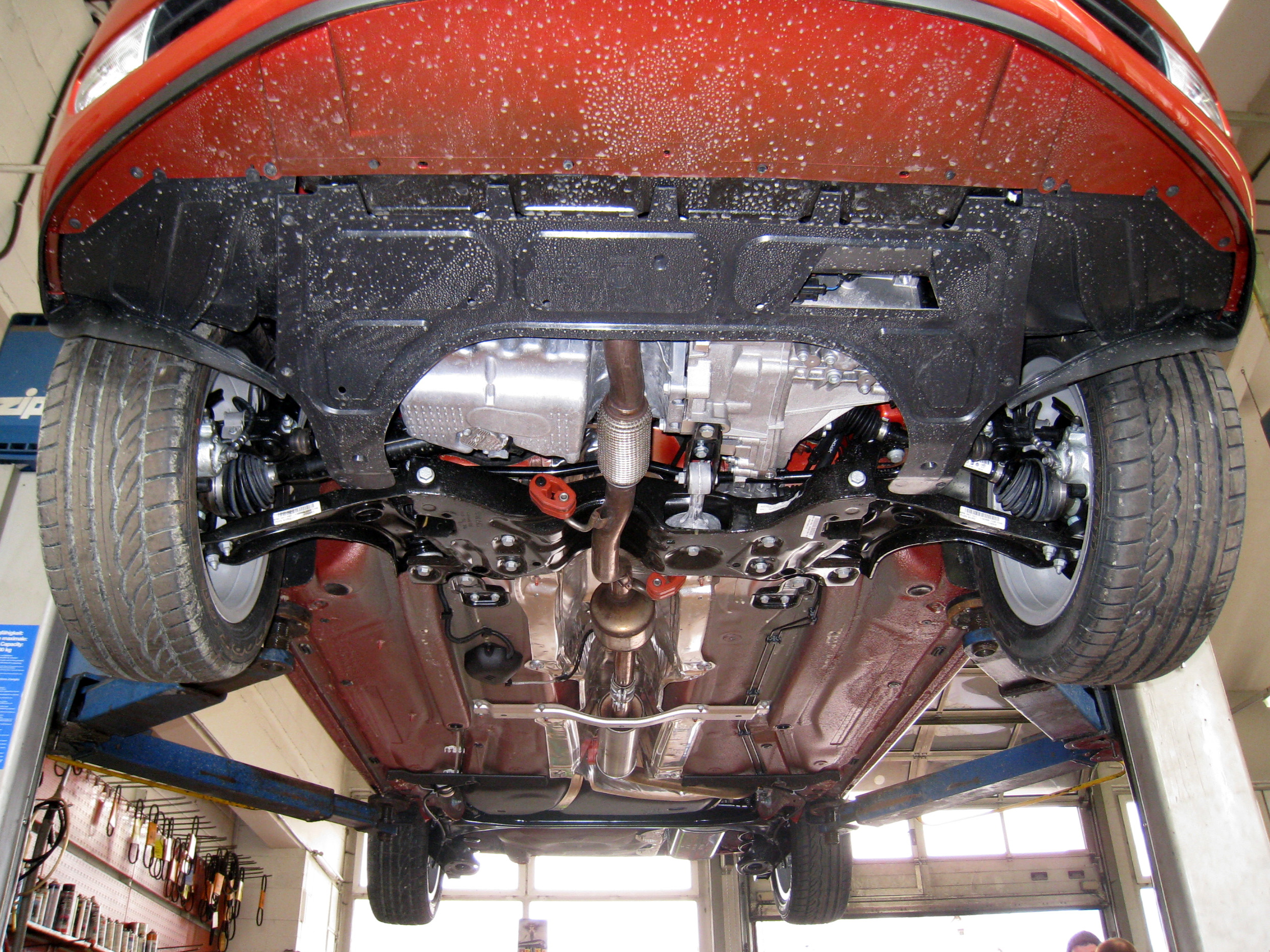
A largely intact underside is the starting point to aim for. Protection helps keep moisture and road salt away from exposed steel, with regular checks and maintenance.
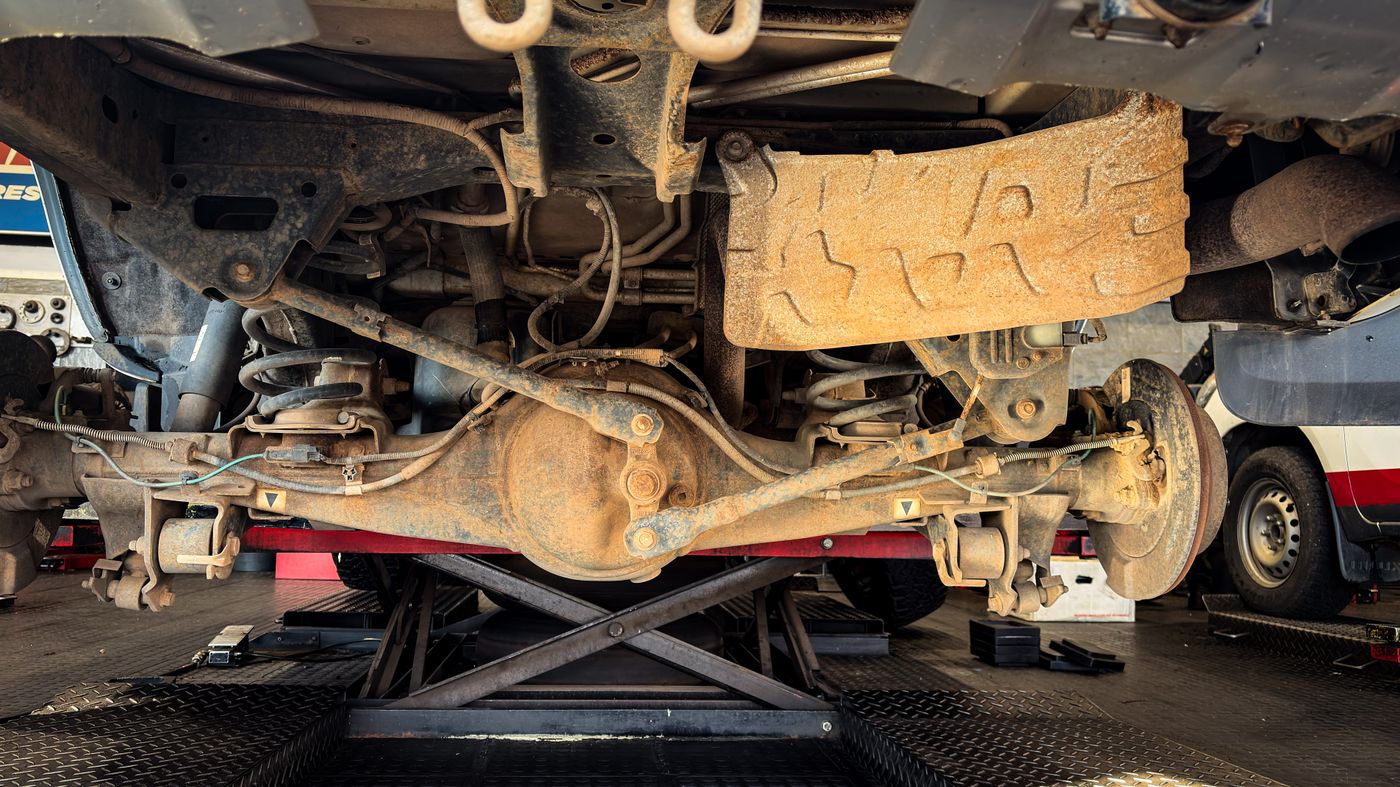
Orange or brown corrosion does not automatically mean the metal is beyond protection. Lanoguard can be applied over sound, stable surface rust after loose material is removed. Suitability needs an inspection, not just a photograph.
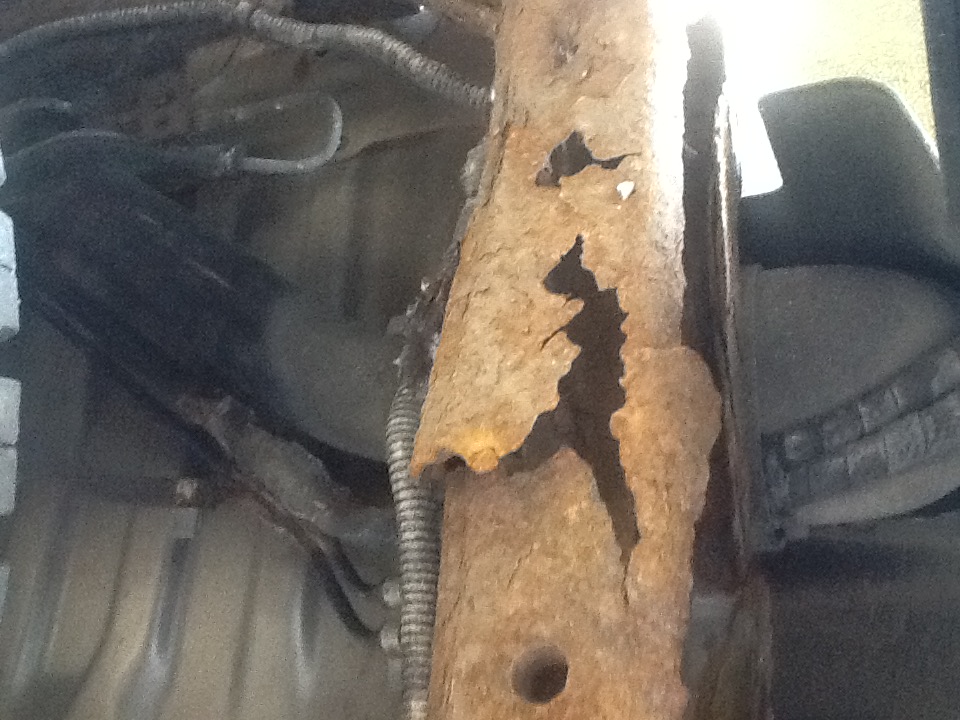
Deep corrosion and holes need structural assessment and appropriate repair or replacement before protection. Lanoguard cannot replace missing metal or restore its strength.
These are possible stages of unchecked corrosion, not a fixed timeline or a prediction for your vehicle. Exposure, vehicle design, existing coatings and maintenance all matter. Manufacturer’s preparation guidance.
Who it's for
Slow the corrosion that ends a car's life early, and keep subframes and sills sound for MOT after MOT.
Seal original panels and fresh repairs alike, with a coating you can inspect and top up rather than one that hides problems.
Ladder chassis, rear crossmembers and outriggers take the worst of farm lanes and wading. They benefit most from a soft, creeping film.
Less time off the road for corrosion repairs, and a van that's in better shape when it's time to sell or trade it in.
Before the gritters come out
£195, or £275 for a large van, done in about 3 hours. The first 5 customers save £35. Tell us what you drive and we'll find you a date.